
Security for the DBS Bank AGM 2026.
We provided event security for the DBS Bank Annual General Meeting 2026. The meeting took one morning in one room, but it took weeks to prepare. The work started with the proxy register and ended with a post-event report signed off by the DBS engagement lead.
An AGM is a formal, tightly run meeting.
At a listed bank's AGM, shareholders come in person or send a proxy. They vote on resolutions, hear the chairman speak and ask the board questions. The meeting is short, follows a set agenda and is recorded. Our job was to let the right people in, keep everyone else out and let the meeting run to its agenda.
Hawkeye handled event security for the whole day, from the morning arrivals to clearing the venue after the meeting. Our senior officer answered to the DBS engagement lead for every decision on the day. The reference at the bottom of this page is from that engagement lead.
Planning started weeks before the meeting.
We walked the venue with the bank's events team and the engagement lead. We mapped the entrances, the registration area, the waiting area for early arrivals, the meeting hall, the chairman's route, the board's exit, the media position and the back corridors. We noted every point where access rules or access cards changed, and every corner where an officer would need to stand.
From that visit we wrote the operations plan. It set out officer numbers, positions, shifts, contacts at DBS and the venue, radio channels, backup routes, and a list of situations the team rehearsed before the day. The engagement lead signed off the plan in writing before the AGM.
Registration is the most important part of the day.
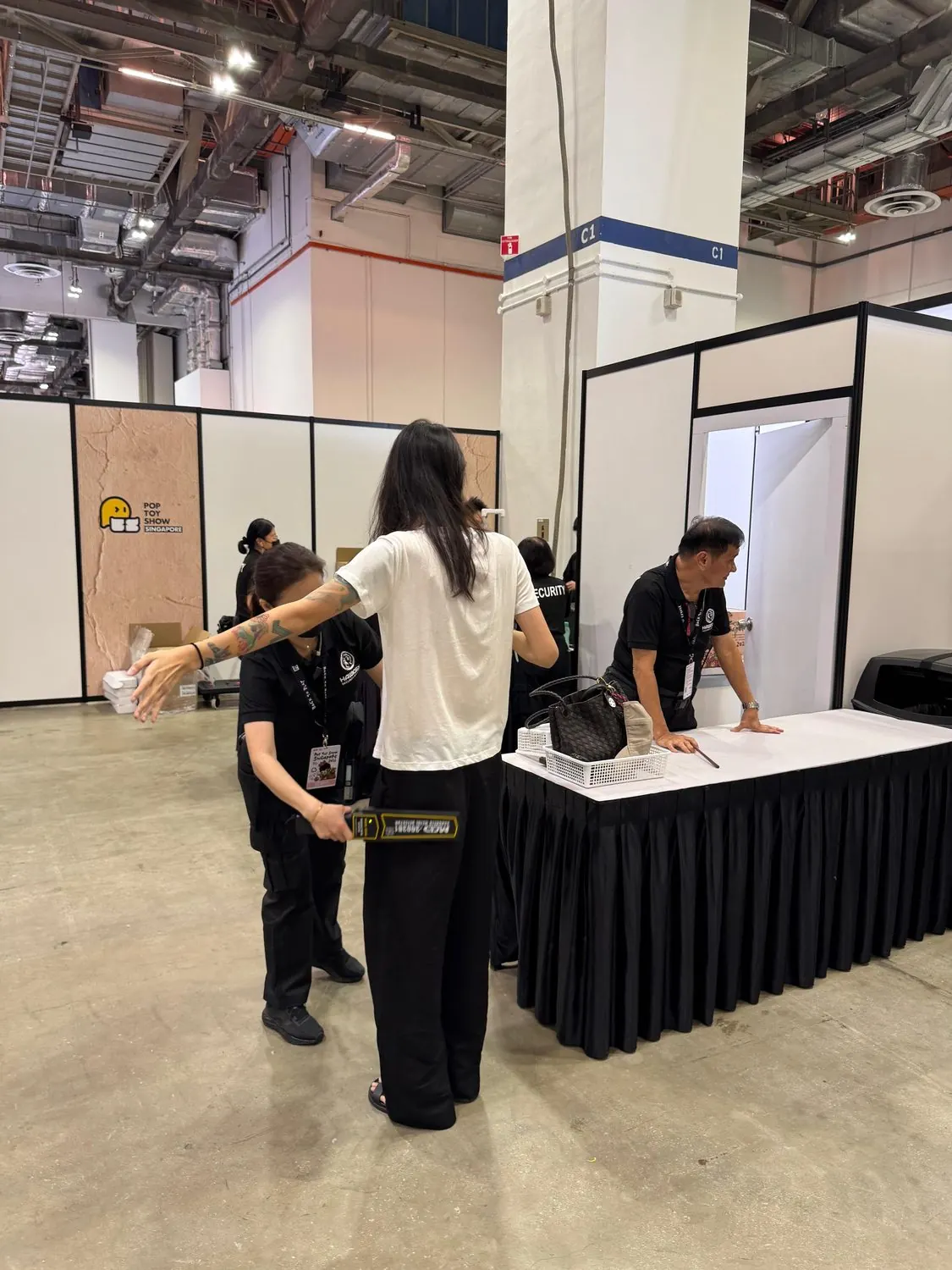
Doors opened at the published time. Shareholders registered with share certificates and ID, or with proxy forms. Our officers worked with the bank's events team and the registrar's staff. They held the screening line, helped guests using the accessible entrance, and walked guests from the registration desk to the seating staff.
Once someone is past registration and inside the hall, they are treated as entitled to be there, so the check at the door is the only check. We brief our officers to be polite and thorough, and to escalate any document that looks wrong. The engagement lead had a desk inside the hall all morning, and any question the registrar could not answer went to them.
During the meeting, officers stay in the background.
Inside the hall, the chairman runs the meeting, the board answers shareholders and the registrar runs the vote. Our officers stand where they can act quickly if needed, without drawing attention. The aim is that a shareholder walking out could not name an officer they spoke to.
The bank keeps the official record of the meeting, and we do not describe it here. Our part of the record is one line: floor covered, no incidents.
Security continues until the room is empty.
After the chairman closes the meeting, the room takes 30 to 45 minutes to empty. Shareholders leave, the board exits by its planned route, the media file their stories and the venue goes back to its own staff. We stay on through all of this, covering the exits, the board's route and any media questions the chairman or CEO takes before leaving.
The senior officer on duty signed the post-event report and sent it to the engagement lead within 48 hours. The bank keeps the report for its records and for the board. Any problem would have been written up there, with who was responsible and how it was fixed. There were none.
What this means for your AGM.
At an AGM, a good result is when nothing happens: no incidents, no delays, nobody slipping past screening and no chairman waiting for a corridor to be cleared.
If you are planning a listed-company AGM, an EGM, a financial-sector general meeting or a board offsite at a hotel, talk to us.
What we can confirm: Hawkeye provided event security for the DBS Bank AGM 2026, and the DBS engagement lead gave us a positive written reference, available on request. The account above shows how we usually run this kind of event. We do not publish operational details such as officer numbers, floor plans or internal procedures.