
Security for the Singapore Sports Hub.
Hawkeye provides security for the Singapore Sports Hub. The site covers 35 hectares and includes a 55,000-seat national stadium, a 12,000-seat arena, an aquatic centre and a public library. Concerts, tournaments, home games and quiet weekdays all run to the same procedures.
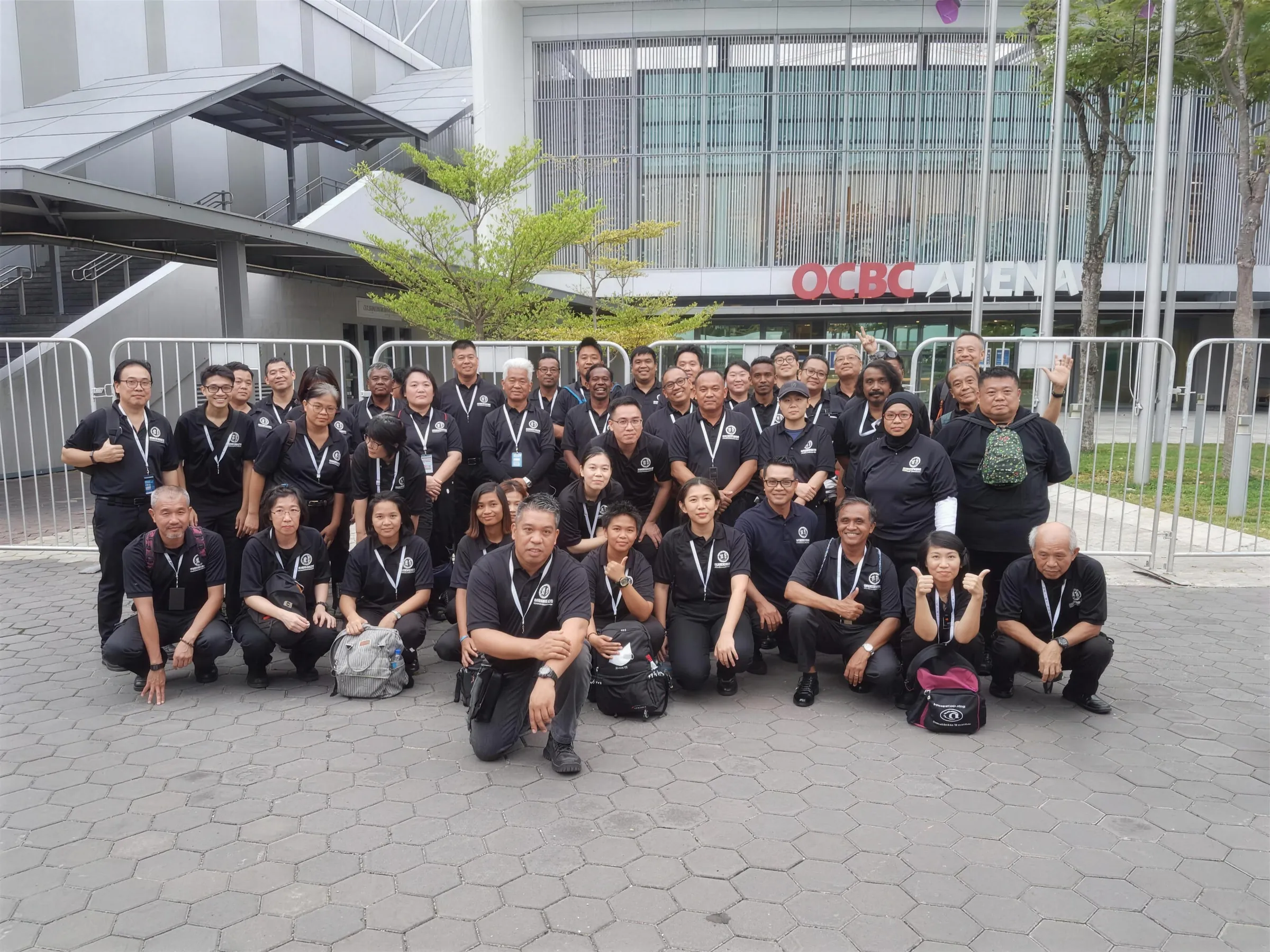
Five venues on one site.
The Singapore Sports Hub covers 35 hectares in Kallang. It has five venues, and on a busy week each one runs like a separate business. The National Stadium (55,000 seats) hosts international football, rugby, athletics and the city's biggest concerts. The OCBC Arena (12,000 capacity, indoor) hosts basketball, ice hockey, badminton and mid-sized concerts. The OCBC Aquatic Centre hosts swimming. The Water Sports Centre sits on the river. The Sports Hub Library is open to the public every day.
Hawkeye covers all five. That means one firm, one team and one chain of command, rather than five separate contracts.
Officers on site every day.
We have officers at every venue every day, whether or not an event is on. An officer is on the library floor before it opens at 10am. An officer is at the pool before the early-morning training squads arrive. When the National Stadium sits empty between events, officers still patrol the perimeter and concourse.
When an event is on, we add an event team. A sold-out concert at the National Stadium needs a team several times the size of the daily team. One Hawkeye control point runs both, and the daily officers keep covering the venues that are not hosting.
The same officers, week after week.
The Sports Hub is home to teams in football, basketball and ice hockey. A Friday-night basketball game at OCBC Arena draws a different crowd from a Saturday football match at the National Stadium, and each needs a different plan.
We do not rotate teams between these fixtures, so the officers on the floor are mostly the same each week. They know the venue, the team staff, the regular fans and how the crowd leaves after a match. Fans and staff recognise them, which makes trouble easier to spot early.
Sold-out concerts and international matches.
Sold-out concerts at the National Stadium and OCBC Arena are the busiest nights of the year. For a 55,000-seat show, crowds start arriving six hours before the doors open, and the stadium has to empty within an hour of the end. Both crowds pass the stadium concourse, the Arena ramp, the riverfront and the MRT station.
Planning for these nights starts with a site visit two weeks before the show. Separate teams, each with a named lead, cover perimeter screening, the concourse, front-of-house, accessible seating, broadcast areas, sponsor and hospitality entrances, artist arrivals, and the walk to Stadium MRT after the show. All teams report to one Hawkeye command post in the venue's operations centre.
The audience sees officers at the doors, bag checks, seating entrances and the foot of the ramp. They do not see the rest: the back-of-house perimeter check, the loading-dock check when the artist arrives, standby cover at medical posts, and an officer on a back staircase kept ready in case the crowd has to be rerouted.
Tournaments that run for a week or more.
A tournament can run for five to nine days. Athletes arrive three days before and accreditation happens two days before. Then come an opening ceremony, several days of competition, broadcast crews working throughout, sponsor hospitality and a closing ceremony. The last day has to run as well as the first.
For tournaments we use a separate roster with longer shifts. One team moves with the athletes and delegations between venues. Another team looks after the public areas. The two teams do not mix, so athletes and the public stay apart.
Our Sports Hub contract has the confidentiality terms you would expect for a national venue. We do not publish officer numbers, perimeter plans, handover points, broadcast-area procedures or artist arrival routes. We can share them under NDA with a client who needs the same kind of cover.
What this means for your venue.
A national venue needs the same standard on a quiet Tuesday, a sold-out Saturday and a two-week tournament. The contract comes up for tender every two to three years, and that is what it is judged on.
We run the Sports Hub with one set of procedures, one command centre and a director on site every week. There is no separate concert team and library team reporting to different supervisors.
If you run a venue and need a long-term security partner, talk to us.