
Security for the Standard Chartered Singapore Marathon.
We provide event security for the Standard Chartered Singapore Marathon every year. We cover the course, the water stations and the elite runners' area. We also cover the parts that are not on the route map: the overnight build that starts the evening before, and the clear-up that runs until mid-morning.
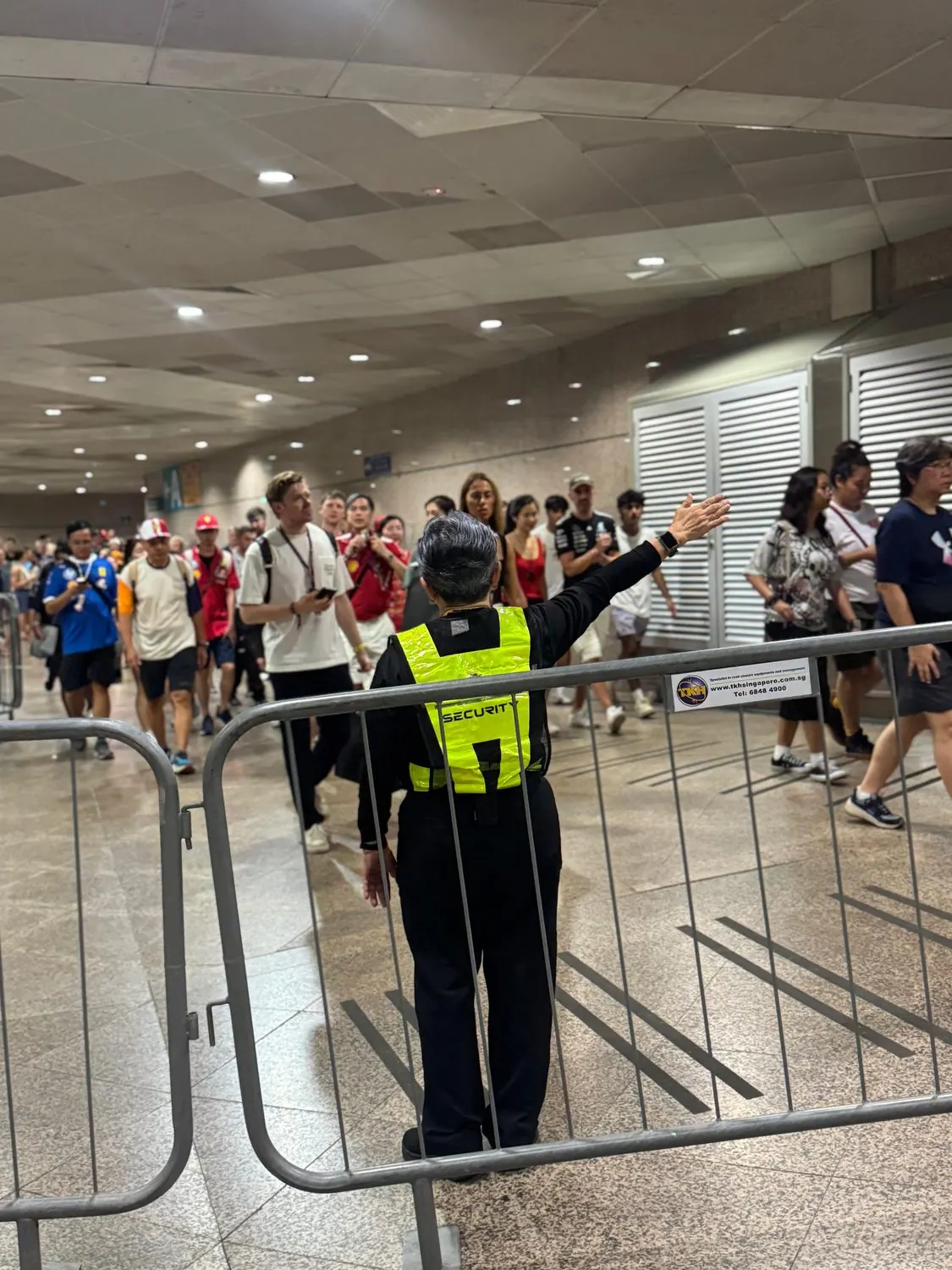
The course is built overnight.
A marathon uses the city as its venue, so there is no fence around it. The start and finish have to be built, water stations go up on roads that normally carry traffic, and everything has to come down before the morning rush. The build starts the evening before, when the LTA and the race's logistics teams bring in road barriers.
Our cover starts with the build. Officers guard the start and finish sites, the gates where trucks bring in water, medical and timing equipment, and the elite runners' area as it is set up. That night we have two jobs: protect the equipment being set up, and make sure only authorised vehicles and people get onto the course before it opens.
The start line at 4am.
By 4am the start line is ready. The start pen is fenced, the timing mats are checked, the stage and sound system are tested, and the elite area is open. Runners start arriving from hotels and HDB estates by taxi, train and shuttle bus. Our officers cover the entrance to the start pen, the elite area and every entry point runners use.
The start pen entrance decides whether the race starts on time. Runners arrive in waves over the 90 minutes before the start, and their race bibs must be visible when they enter. Officers check bibs, hold the queue and direct runners. Volunteers look after the runners, and our officers look after the perimeter. Both teams are briefed together at 3:30am before taking their positions.
The race starts and the roads close.
When the race starts, every road on the route is closed, every junction is controlled and every water station is running. The full marathon, half marathon and shorter races together close about 28 kilometres of road. Our work continues until the last runner crosses the finish line.
Most incidents happen in the middle of the race.
The time between the start and the first finishers is the longest stretch. Most runners are on the course, the temperature is rising, medical teams are busy, volunteers are getting tired, and crowds are building near the finish.
Most incidents are medical: heat exhaustion, dehydration and falls. The race's medical teams treat them. Our officers keep the route to the medical tent clear, make way for medical vehicles and keep other runners moving past. The aim is that the runner who collapsed gets help and the runners behind can keep going.
The last hundred metres.
The finish area runs like a stadium. Runners pass through a fenced finishing lane into a recovery area, where they get their medals, water and food, and collect their bags. The recovery area is fenced off from spectators, and the exit leads to public transport.
At the finish, our officers guard the finishing lane, allow only finishers into the recovery area, check race chips at bag collection, and manage the area where families wait. The exit cordon stays until the last runner finishes, which can be three to five hours after the winners.
The roads go back to normal.
By mid-morning most runners have finished and the clear-up begins. Water stations come down, barriers are collected, junctions reopen and the start and finish are taken apart. Our officers stay through the clear-up, with fewer people on longer shifts.
The senior officer on duty signs the post-event report and sends it within 72 hours. The course was kept clear, runners were safe, medical cases were handled and the roads reopened on time. For a marathon, that is the job.
The marathon organisers have confidentiality terms. We do not publish officer numbers, route plans, command structure or changes made after incidents. We can share details under NDA on request.